GS PAPER III — ECONOMY / ENERGY SECURITY · March 12, 2026 · 9 min read
A policy analysis of India's structural energy vulnerabilities exposed by the 2026 West Asia conflict
Key Figures at a Glance
| Indicator | Figure | Note |
|---|---|---|
| India's LNG import dependence | 45–50% | of gas consumption |
| LNG transiting Strait of Hormuz | ~90% | under normal conditions |
| Qatar + UAE share of LNG imports | 53% | Kpler data |
| Domestic LPG production boost | +25% | post-govt order |
| Crude oil inventory buffer | ~25 days | as of 3 March 2026 |
| Strategic gas reserves | None | no SPR equivalent |
1. Context: When the Strait Stopped
On 2 March 2026, a senior IRGC commander announced the closure of the Strait of Hormuz, describing the waterway as a zone where vessels would be "ignited." Within 24 hours, five ships were attacked. Insurance markets froze. Brent crude, already 37% higher on the year, surged further. And India — which depends on the Strait for over 50% of its LNG imports — was forced to confront a structural vulnerability it had long deferred addressing.
The immediate trigger was the US–Israel joint strike on Iran on 28 February 2026, which killed Supreme Leader Ali Khamenei and set off a cascade of retaliatory strikes across Gulf infrastructure. QatarEnergy — India's single largest LNG supplier — halted production after Iranian drone attacks on the Ras Laffan and Mesaieed industrial complexes. Petronet LNG, India's largest LNG importer, issued a force majeure notice. GAIL reported that its allocation from the Qatar contract had been reduced to zero.
The disruption has been described as the largest energy supply shock since the 1973 oil crisis.
2. Structural Exposure: Architecture, Not Accident
India's vulnerability to the Hormuz closure is not incidental — it is architectural. The country imports 45–50% of its natural gas requirements as LNG, and Qatar and the UAE together account for 53% of those imports. Nearly 90% of India's LNG imports normally transit the Strait of Hormuz before entering the Arabian Sea.
This concentration reflects a decade of policy choices: long-term LNG contracts favoured Gulf suppliers due to proximity and price; domestic gas exploration was underinvested; and the strategic imperative of source diversification was subordinated to short-run cost optimisation.
The Reserve Asymmetry
India lacks large-scale strategic gas reserves. Unlike crude oil — where the country maintains approximately 40–45 days of inventory in strategic petroleum reserves — there is no equivalent buffer for natural gas. This asymmetry is now starkly visible: India had 25 days of crude and diesel inventory as of 3 March 2026; for gas, there is no comparable cushion.
Infrastructure Constraints
LNG regasification terminals are unevenly distributed, concentrated in Gujarat and the west coast. Pipeline networks, while expanding under PNGRB's national grid programme, remain insufficient to reroute supply from alternative import points quickly. The crisis has exposed these gaps at the worst possible moment.
3. Government Response
The government's crisis response has been swift but reveals the limits of reactive policy. On 9 March, the Ministry of Petroleum and Natural Gas issued a Natural Gas Control Order under the Essential Commodities Act, overriding commercial contracts and instituting a priority-based gas allocation regime.
Priority Allocation Framework
| Sector | Allocation |
|---|---|
| Household PNG & CNG for transport | 100% |
| Industrial grid consumers (tea, small manufacturing) | ~80% |
| Fertiliser plants | ~70% |
| Refineries & petrochemical complexes | ~65% |
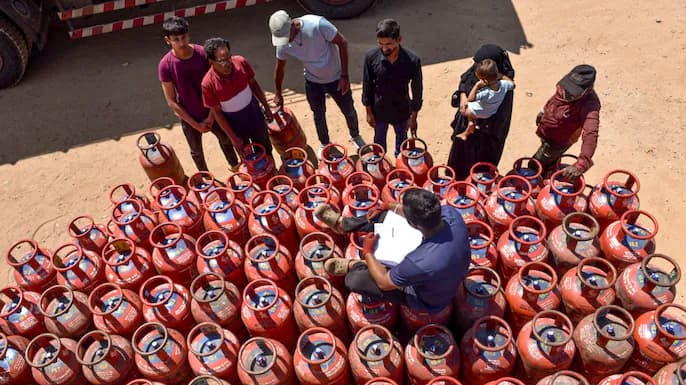
On 8 March, a separate order directed refineries to maximise LPG production by diverting propane, butane, propylene and butene streams into the cooking gas pool. Domestic LPG output has subsequently risen by approximately 25%, with the entire domestic supply directed toward household consumers.
Diplomatic Track
On the diplomatic front, External Affairs Minister Jaishankar's engagement with Iranian Foreign Minister Araghchi secured a reported arrangement allowing India-flagged tankers safe passage. MT Pushpak and MT Parimal have successfully transited the Strait. Seven Indian-flagged vessels previously stranded east of the strait have since exited to the Arabian Sea.
Crisis Timeline
| Date | Event |
|---|---|
| 28 Feb | US–Israel joint strikes on Iran. Khamenei killed. |
| 2 Mar | IRGC announces Strait closure. Five vessels attacked within 24 hours. |
| 3 Mar | Petronet LNG issues force majeure. GAIL Qatar allocation reduced to zero. |
| 4 Mar | Qatar declares force majeure on LNG contracts. |
| 8 Mar | Govt order to maximise LPG production by diverting refinery streams. |
| 9 Mar | Natural Gas Control Order issued under Essential Commodities Act. |
| 11 Mar | India secures alternative LNG cargoes. Jaishankar–Araghchi talks. |
| 12 Mar | India-flagged tankers secure safe passage. MT Pushpak transits Strait. |
4. Economic Implications
The sectoral economic impact is significant and unevenly distributed. Energy-intensive industries dependent on imported LNG — ceramics, glass, fertilisers — face near-term production disruptions. Crisil Ratings has flagged that crude-linked industries, including tyres, paints, specialty chemicals, flexible packaging and synthetic textiles, face elevated cost pressures if energy prices remain elevated.
In automotive manufacturing clusters in Gujarat and Maharashtra, gas is widely used for captive power generation and industrial heating; supply cuts force expensive fuel-switching or production scaling. The fertiliser sector's 30% supply curtailment has downstream implications for agricultural input costs that will not be visible immediately but could manifest before the Kharif season.
Inflationary transmission is the most politically sensitive dimension. Household cooking gas is currently protected — but any prolonged disruption will test the government's capacity to absorb subsidy costs.
5. Way Forward: Five Policy Imperatives
i. Source Diversification
India must accelerate long-term LNG contracts with non-Gulf suppliers. Australia, the United States (particularly post-LNG export expansion), Mozambique, and Tanzania offer credible alternatives. A portfolio approach — spreading volume across geographically diverse suppliers — is essential for resilience.
ii. Strategic Gas Reserves
The asymmetry between crude and gas reserve buffers must be addressed urgently. India requires a strategic LNG reserve facility, likely sited at west coast regasification terminals with expanded cryogenic storage. Even 15–20 days of gas inventory would materially alter crisis management options.
iii. Domestic Production
The Hydrocarbon Exploration and Licensing Policy (HELP) framework must be activated more aggressively. India's domestic gas production has been stagnant. Deepwater blocks in the KG Basin and Andaman offer long-term upside but require sustained investment certainty and faster block award processes.
iv. Renewable Energy Transition
Accelerating India's 500 GW non-fossil energy target by 2030 is not merely a climate commitment — it is an energy security hedge. Each gigawatt of renewable capacity that displaces gas-fired generation reduces the LNG import requirement. Green hydrogen, if cost-competitive by 2030–35, could structurally reduce industrial gas demand.
v. Naval and Diplomatic Preparedness
The Jaishankar–Araghchi channel demonstrated the value of proactive diplomacy in crisis management. India must invest in institutionalising such channels rather than activating them reactively. The Indian Navy's Arabian Sea presence is a deterrent asset that should be explicitly integrated into energy security planning.
Conclusion: Preview, Not Aberration
The Hormuz crisis of 2026 is not an aberration. It is, as one analyst put it, a preview. The Strait will reopen — diplomatic accommodation or military exhaustion will see to that. But the underlying conditions — a militarised Gulf, contested US influence in West Asia, Iranian leverage over global energy chokepoints, and India's structural import dependence — will persist.
India has responded to the immediate crisis with commendable administrative agility: the Essential Commodities Act activation, the priority allocation framework, diplomatic engagement with Tehran, and spot cargo procurement from Oman all reflect a state that can manage an acute shock. What the crisis has exposed is the longer-term policy deficit: the absence of strategic gas reserves, the insufficient pace of source diversification, and the gap between India's stated energy security ambitions and the investment allocations required to realise them.
The question is whether the current disruption generates sufficient political urgency to drive structural reform — or whether, as in past energy crises, the pressure dissipates once the Strait reopens and the headlines move on.
Sources: Business Standard · BusinessToday · The Week · CNBC TV18 · Wikipedia (2026 Strait of Hormuz Crisis) · Takshashila DSC 12 March 2026 · MoPNG Official Briefings · Kpler LNG Trade Data · Crisil Ratings · UBP Economic Research