Study
Conducted by the Assam Forest Department in collaboration with WWF-India (April 2021–June 2026).
Key Findings
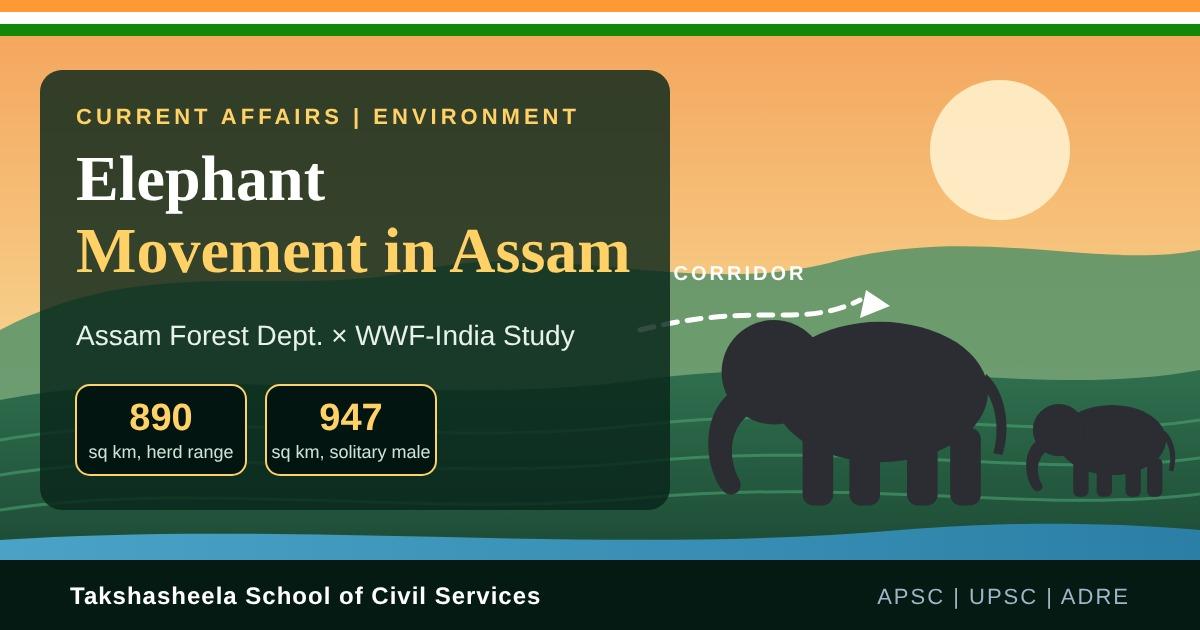
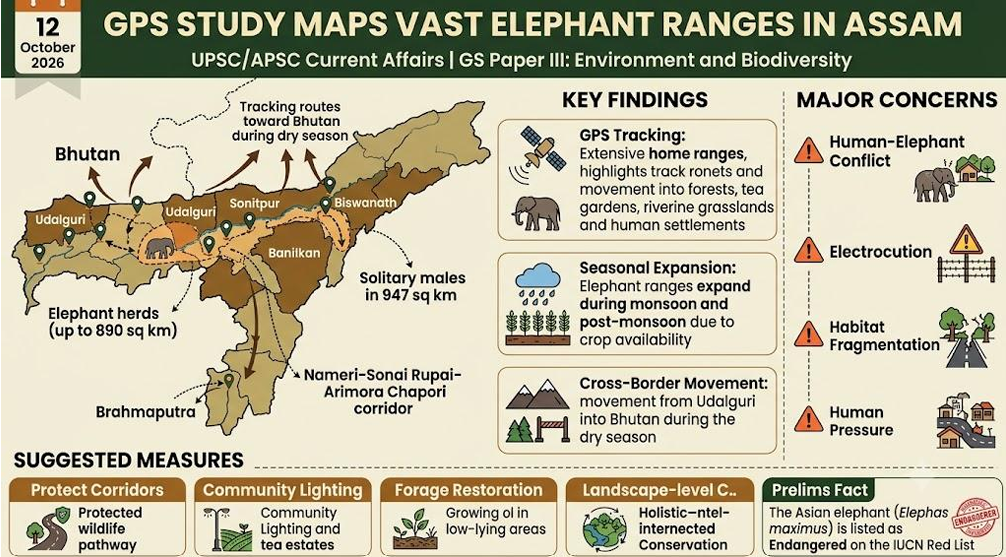
Elephant herds have extensive home ranges, with one herd covering 890 sq km and a solitary male covering 947 sq km.
Elephants use forests, tea gardens, agricultural fields, riverine grasslands and human settlements.
Their ranges expand during the monsoon and post-monsoon seasons, possibly due to crop availability.
Elephants from Udalguri also move into Bhutan during the dry season.
The Nameri–Sonai Rupai–Arimora Chapori corridor is important for elephant movement towards the Brahmaputra.
Major Concerns
Human–elephant conflict and accidental encounters.
Electrocution from electric fencing.
Habitat fragmentation and obstruction of traditional elephant corridors.
Increasing human pressure on natural habitats.
Suggested Measures
Protect and restore elephant corridors.
Improve lighting in tea estate settlements and along roads.
Restore suitable low-lying areas in tea gardens to improve forage availability.
Ensure electric fences do not block traditional elephant routes.
Adopt a landscape-level approach to elephant conservation.
Practice Questions
Mains Question
Q. Discuss the challenges of human–elephant conflict in Assam and suggest measures for landscape-level elephant conservation. (150 words)