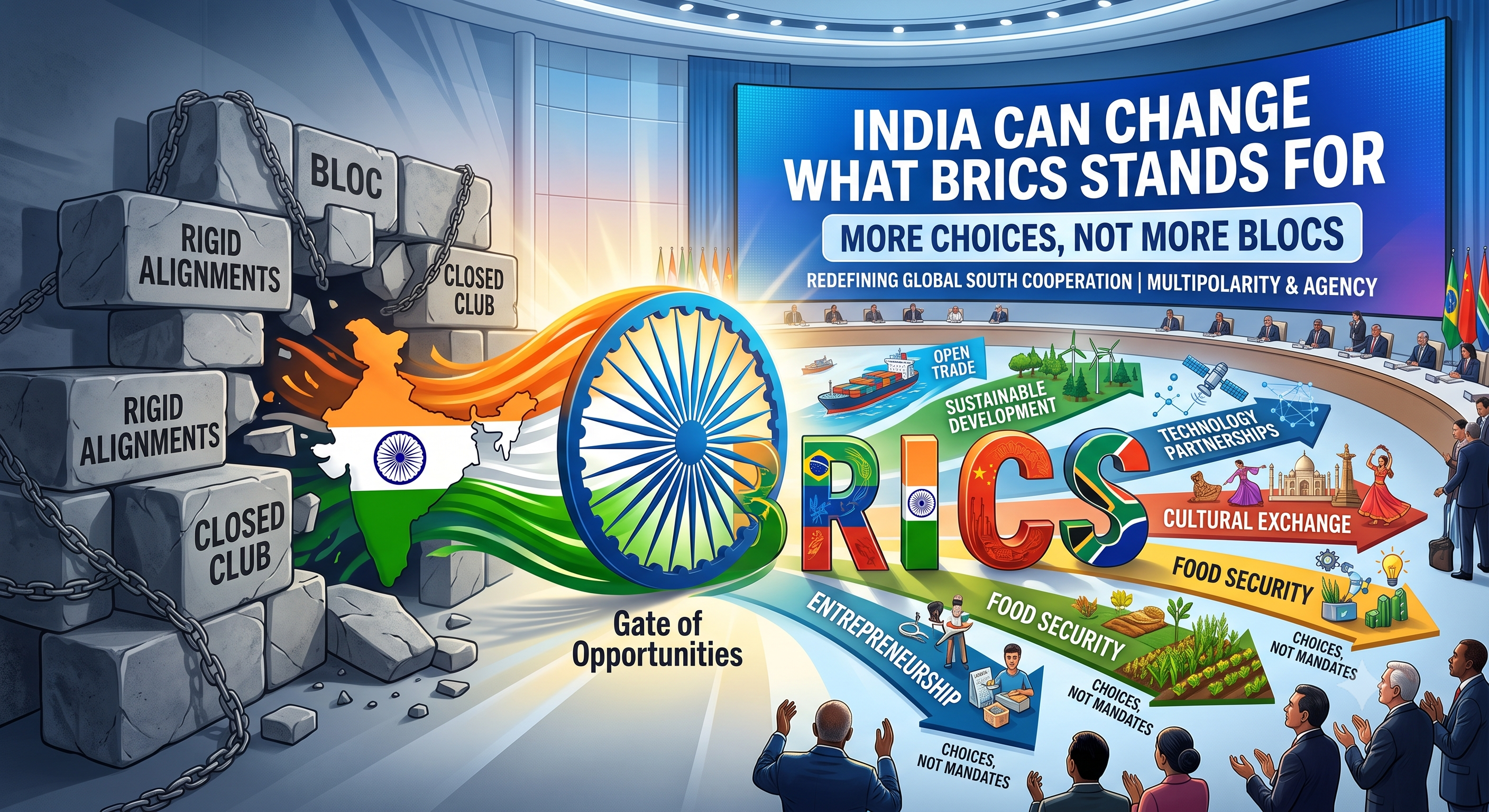
The editorial proposes the creation of an International Institute for Regulatory Development (IIRD) headquartered in India to develop global standards for Artificial Intelligence (AI), financial stability, and climate risk. It argues that existing institutions do not adequately represent the interests of emerging economies, and India can lead a more inclusive global governance architecture through BRICS and the G20. INDIA’S ADVANTAGES -
Strategic Autonomy: India should avoid choosing between US and China and instead strengthen an independent foreign policy.
Multipolarity: BRICS should promote multiple centres of power rather than replace one hegemon with another.
Global South Leadership: India can act as the voice of developing countries in shaping international institutions.
AI Governance: India should lead the creation of an inclusive regulatory framework for AI, finance, and climate risks.
Institution Building: BRICS should focus on practical cooperation such as payment interoperability, New Development Bank reforms, and technology standards.
India's BRICS presidency presents an opportunity to strengthen strategic autonomy, champion Global South interests, and promote inclusive global governance through reforms in finance, technology, and AI regulation, thereby reinforcing a multipolar and rules-based international order. The Global South broadly refers to developing and emerging countries of Asia, Africa, Latin America and the Caribbean that often have limited representation in major global institutions. India seeks to act as a bridge between developed and developing countries and raise the concerns of developing nations in global forums. India should pursue issue-based coalitions rather than rigid blocs, strengthen South-South cooperation, promote reform of global institutions, share its digital and development solutions, and build consensus between the Global North and Global South.