Key Facts
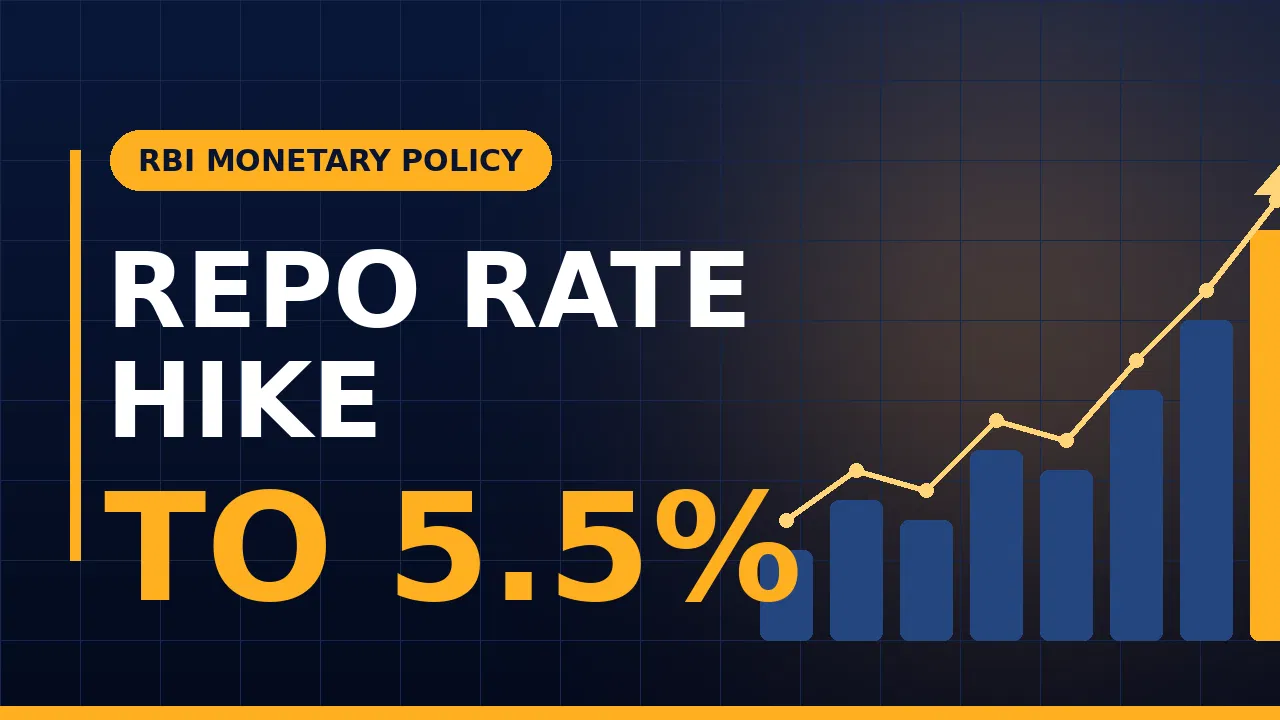
RBI MPC raised the Repo Rate by 25 bps → 5.25% to 5.50%.
Policy stance: Neutral → Calibrated tightening.
SDF: 5.25%
MSF & Bank Rate: 5.75%
Repo rate had earlier been cut by 125 bps, from 6.5% to 5.25%.
RBI cited West Asia conflict, crude oil price volatility, global financial tightening and inflation risks as major concerns.
Headline CPI inflation: expected to average around 5.8% over the next three quarters.
Core inflation: projected at 4.4% for the financial year.
Why Did RBI Raise the Repo Rate?
Global risks → Higher crude prices → Supply-side inflation → Inflation expectations → Monetary tightening
Other Concerns
Geopolitical tensions and West Asia conflict
Rising global energy and food prices
Higher bond yields in advanced economies
Global financial-market volatility
Possible overvaluation of AI-related stocks
Practice Questions
Prelims Question
Q. With reference to the monetary policy instruments of RBI, consider the following statements:
An increase in the repo rate generally makes borrowing more expensive for commercial banks.
SDF allows banks to park surplus liquidity with RBI without providing collateral.
An increase in the repo rate is normally intended to stimulate aggregate demand.
Which of the statements given above is/are correct?
A. 1 and 2 only
B. 2 and 3 only
C. 1 and 3 only
D. 1, 2 and 3
Answer: A. 1 and 2 only
Mains Question
Q. “Monetary tightening is necessary to anchor inflation expectations, but excessive tightening can adversely affect economic growth.” Discuss in the context of the RBI’s recent repo rate hike. (150 words)